



Qu\'est-ce que tu cherches?
Centrales photovoltaïques sur neige : un rapport de l’AIE identifie une nouvelle opportunité.
Feb 27, 2026
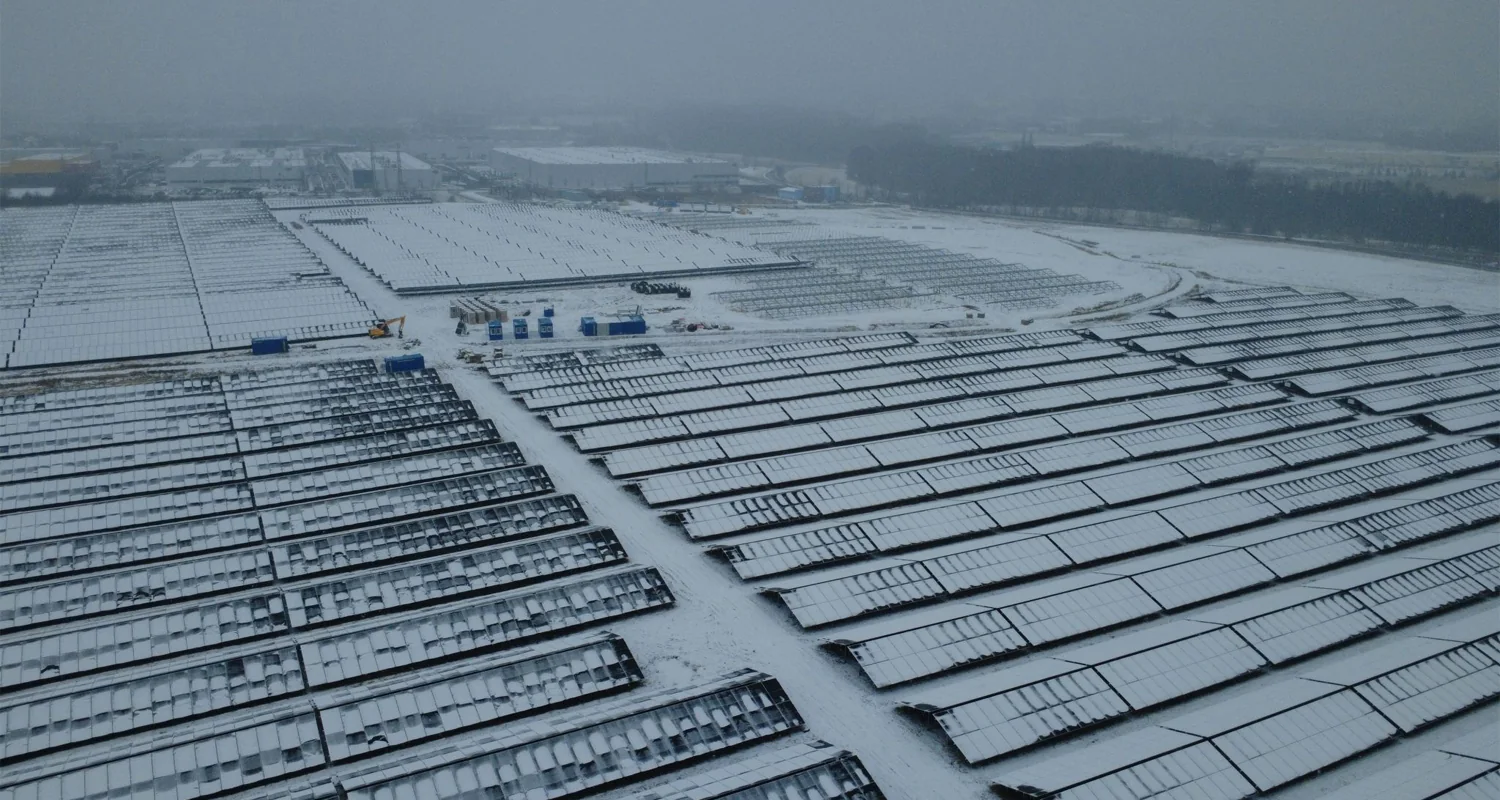
L'Agence internationale de l'énergie (AIE) indique que les supports à inclinaison fixe montés verticalement et modules photovoltaïques (PV) bifaciaux peut être le moyen le plus efficace de déployer systèmes photovoltaïques (PV) solaires dans la région arctique.
Le groupe de travail 13 de l'AIE sur les systèmes d'énergie photovoltaïque (PVPS) a publié un rapport explorant la faisabilité et les défis de l'installation de systèmes PV dans sa région définie du « Grand Arctique » (zones au-dessus de 60°N).
Plus précisément, cette région comprend les pays nordiques et l'Alaska (États-Unis), des zones reculées où les fréquentes chutes de neige et les basses températures rendent l'installation d'infrastructures électriques extrêmement difficile.
Toutefois, le rapport souligne que Panneaux photovoltaïques solaires Ces modules peuvent être déployés efficacement dans ces environnements. Les fréquentes chutes de neige confèrent à ces régions un albédo élevé (phénomène de réflexion de la lumière solaire sur la surface brillante de la neige), ce qui rend les modules bifaciaux particulièrement performants pour convertir la lumière solaire réfléchie en électricité. Le rapport indique également que ces modules peuvent être installés verticalement, orientés est-ouest, afin de réduire la surface de neige sur les modules photovoltaïques et, par conséquent, l'effet d'albédo.
De plus, les supports à inclinaison fixe sont particulièrement adaptés à l'environnement arctique grâce à leur structure simple et leur fonctionnement fiable lors des cycles de gel-dégel, ce qui les rend moins vulnérables aux dommages ou aux pannes dans des conditions extrêmes. Les systèmes à inclinaison fixe au sol présentent généralement un espacement plus important entre les rangées afin de minimiser les pertes dues à l'ombrage, et leur hauteur d'installation plus élevée empêche l'accumulation de neige sur les modules photovoltaïques.
« Les communautés arctiques ont des besoins uniques et des applications innovantes de énergie photovoltaïque et renouvelable « Les technologies peuvent répondre à ces besoins », expliquent les chercheurs de l’Agence internationale de l’énergie dans leur rapport. Ils suggèrent également que l’intensification de la recherche et des investissements dans l’énergie solaire arctique pourrait profiter à l’ensemble du secteur solaire, à mesure que les projets se déploient dans des environnements plus reculés et extrêmes.
Alors que les coûts d'installation de l'énergie solaire continuent de baisser à l'échelle mondiale, la technologie photovoltaïque se développe non seulement aux hautes latitudes, mais aussi aux latitudes moyennes et élevées, des régions qui connaissent également des chutes de neige et des températures basses. Il est donc nécessaire d'étudier ces paramètres et leur impact sur les performances, le fonctionnement et la maintenance des systèmes photovoltaïques. L'énergie renouvelable contribue à la sécurité énergétique de l'Arctique. Le rapport souligne que de nombreuses régions arctiques habitées à travers le monde utilisent actuellement des énergies renouvelables pour leur production d'électricité. Investir continuellement dans de nouvelles sources d'énergie renouvelables, telles que l'énergie solaire, est essentiel pour que ces régions restent indépendantes et ne dépendent pas des importations et de l'utilisation des combustibles fossiles.
« De nombreuses communautés arctiques sont confrontées à des difficultés d’approvisionnement en combustibles fossiles en raison des coûts de transport élevés et de la volatilité des prix mondiaux, ce qui réduit leur sécurité énergétique et compromet les objectifs de souveraineté des communautés autochtones de la région », expliquent les auteurs du rapport.
« En raison de la volatilité des prix du carburant et des difficultés logistiques liées au transport du carburant par voie maritime ou aérienne (qui peut s'avérer impossible en hiver), les coûts de l'électricité dans les communautés arctiques isolées peuvent être plus élevés et plus instables que dans les zones raccordées au réseau. »
En effet, le rapport souligne que la Norvège, la Suède et l'Islande, avec une consommation annuelle totale d'électricité de 126,1 TWh, dépendent fortement de l'hydroélectricité pour satisfaire leurs besoins énergétiques, celle-ci représentant respectivement 89,1 %, 70,7 % et 70,6 % de leur demande en électricité. La Finlande, quant à elle, affiche la plus forte consommation annuelle d'électricité parmi les pays analysés, atteignant 80 TWh, dont près de la moitié est assurée par l'énergie nucléaire. L'hydroélectricité et l'énergie éolienne constituent respectivement la deuxième et la troisième source d'énergie, représentant 18,8 % et 18,2 % de la consommation totale d'électricité.
Le rapport souligne également que l'énergie solaire distribuée pourrait être particulièrement utile aux communautés arctiques isolées, car le manque d'infrastructures de transport dans ces régions rend difficile l'importation de sources d'énergie comme le pétrole.
En fait, le rapport indique que l'intégration systèmes de stockage d'énergie par batterie L’intégration de systèmes de stockage d’énergie par batterie (BESS) dans de tels projets est « coûteuse » et nécessite des métaux alcalino-terreux rares, qui sont « rares à l’échelle mondiale ». Le rapport suggère que la production locale d’électricité grâce à des projets solaires distribués est une solution plus viable pour répondre à la demande en électricité que la construction de centrales solaires à grande échelle équipées de batteries, pratique courante dans d’autres régions.
Le manque de données disponibles constitue un obstacle majeur. Toutefois, le rapport souligne que le déploiement à grande échelle de systèmes photovoltaïques dans la région arctique se heurte encore à de nombreux défis. Outre les difficultés pratiques liées à l'installation de nouvelles capacités de production d'électricité dans des zones reculées dépourvues d'infrastructures de réseau robustes, et les difficultés d'entretien et de réparation dans certaines régions inaccessibles du monde, le manque d'informations sur le fonctionnement des systèmes photovoltaïques en milieu arctique pourrait également freiner les décisions d'investissement futures.
Le rapport souligne que le manque de données disponibles sur les performances du photovoltaïque solaire dans la région arctique constitue un obstacle majeur. Ce manque de données entraîne des prévisions inexactes de la production des projets, ce qui peut dissuader les investisseurs d'y investir. De même, la modélisation économique des coûts et des retours sur investissement dans les régions de haute latitude est extrêmement complexe, ce qui réduit encore davantage l'attrait économique de tels investissements.
Ces défis font écho à ceux soulevés dans un rapport sur le photovoltaïque flottant (FPV) publié l'année dernière par le Programme sur les systèmes d'énergie photovoltaïque de l'Agence internationale de l'énergie, qui a constaté une précision insuffisante dans la modélisation. projets photovoltaïques flottants L’absence de précédents en matière de déploiement de l’énergie solaire et des systèmes photovoltaïques flottants dans l’Arctique signifie que les données disponibles pour prédire les performances futures des projets sont moindres, ce qui pourrait freiner l’intérêt pour le déploiement de ces nouveaux projets.



5th floor, Block A, Science Avenue,High-tech District, Hefei , Anhui .China
 Accueil