



Qu\'est-ce que tu cherches?
Un extra optionnel coûtant 8 000 yuans ? Toit solaire pour véhicules : la prochaine « opportunité de croissance » ?
Aug 19, 2026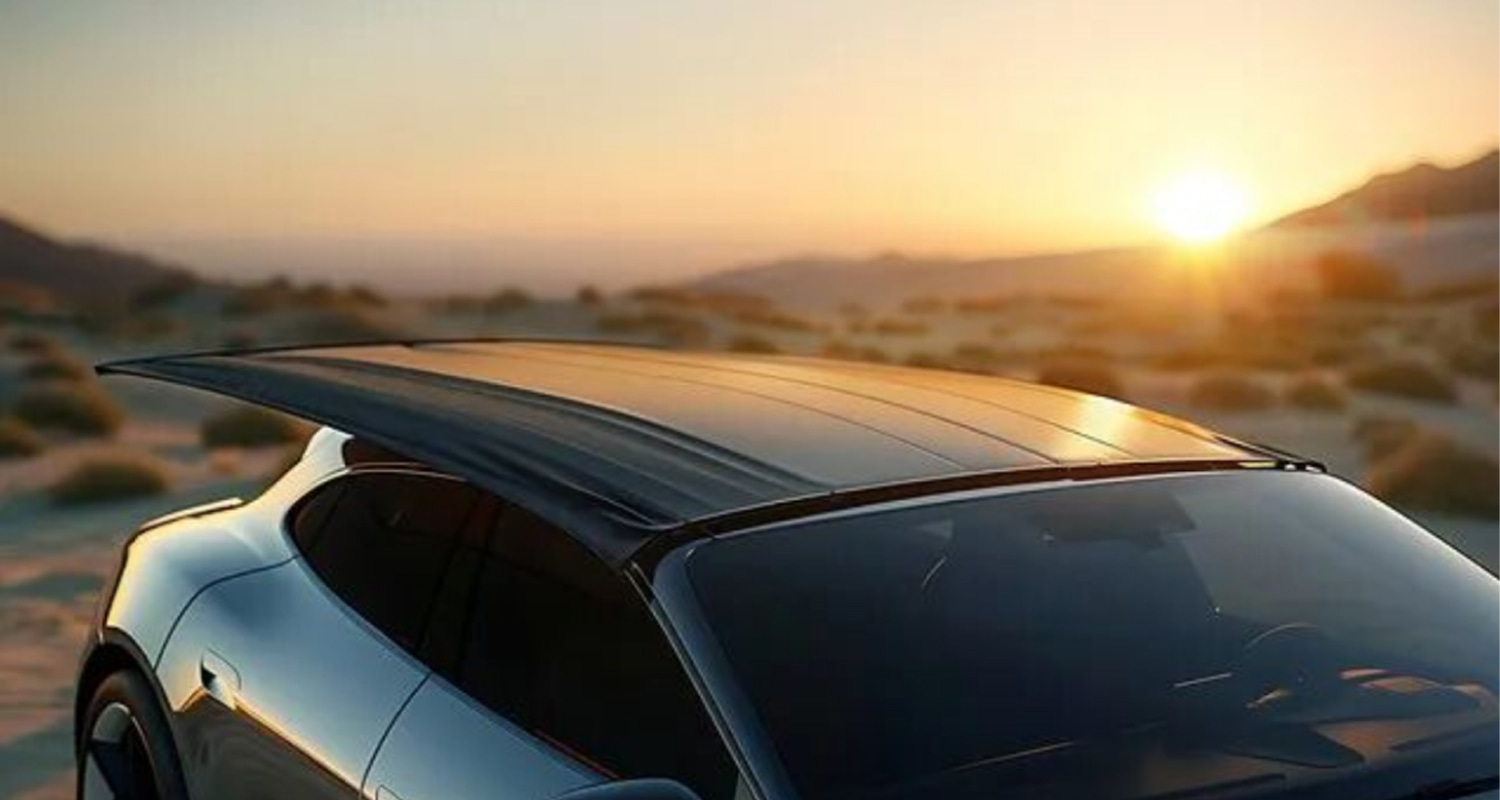
Les toits de voitures alimentés par l'énergie solaire deviendront-ils le prochain moteur de croissance ?
Récemment, des informations ont circulé selon lesquelles les toits solaires de BYD seraient déjà en production de masse, et que ces toits « générateurs de soleil » seraient désormais disponibles en option sur quatre modèles populaires — la Han DM-i, la Han EV, la Tang DM-i et la Tang EV — chez les concessionnaires.
Bien que de nombreux rapports aient circulé sur le marché, BYD n'a pas officiellement confirmé cette information. Des demandes concernant l'option d'un toit solaire auprès du site officiel de BYD ont été adressées au service client, qui a répondu qu'« il n'existe actuellement aucune information pertinente ».
En outre, les toits solaires ne figurent pas comme option sur les sites officiels des modèles populaires mentionnés ci-dessus. De plus, selon les retours de certains internautes, des demandes auprès de concessionnaires voisins ont également révélé que cette option n'était actuellement pas disponible.
Bien que la production de masse des toits solaires de BYD ait fait l'objet de nombreuses discussions, en réalité, il ne semble exister aucune preuve de production de masse, ni en ligne ni hors ligne, et presque aucune photo réelle de véhicules équipés de toits solaires n'a été publiée.
Par conséquent, BYD n'a pas officiellement confirmé la production de masse de son toit solaire, et sa plateforme officielle d'information n'a publié aucune information de ce type.
Les « 8 000 toits solaires » dont on parle pourront-ils réellement voir le jour ?
Bien que BYD n'ait pas officiellement confirmé la production de masse de son toit solaire, cela ne signifie pas que ce produit sera impossible à produire en masse à l'avenir.
Selon de précédentes rumeurs en ligne, le produit de toit solaire de BYD est un module solaire automobile intégré développé conjointement par BYD et Fuyao Glass. Ce produit combine des fonctions de production d'électricité et d'isolation thermique. Le toit utilise une structure sandwich intégrée à cinq couches avec des cellules photovoltaïques ultrafines et à haut rendement intégrées au centre, permettant une transmission lumineuse de 72 %.
En outre, selon des données en ligne, le toit solaire de 720 W de BYD est proposé au prix de 8 000 yuans en option, utilisant des batteries HJT avec un rendement de conversion courant de 23,18 %.
Il est rapporté que par temps ensoleillé dans le sud de la Chine, le système peut produire de manière stable 3,5 à 4,8 kWh d'électricité après être resté à l'extérieur pendant 8 heures, ce qui correspond à une autonomie supplémentaire de 40 à 50 kilomètres. Par temps nuageux ou pluvieux, la production d'électricité diminue fortement, pour atteindre seulement environ 1,5 kWh. Le système donne la priorité au rechargement de la batterie basse tension 12 V , principalement afin de compenser la consommation électrique statique dans des modes tels que le mode Sentinelle, la partie restante étant progressivement transférée vers la batterie principale. Le toit utilise cinq couches de verre feuilleté, bloquant 99 % des rayons ultraviolets et 85 % des rayons infrarouges. En plein soleil, la température intérieure peut être réduite d'environ 8 °C, et cet effet d'isolation thermique contribue aux économies d'énergie — un avantage caché.
En outre, selon des rapports précédents, il dispose également d'un design à « coulissement par couches » : après l'arrêt complet de la voiture et l'extinction du moteur, la deuxième couche de l'aile coulisse automatiquement vers l'arrière de 400 mm, augmentant la surface de réception de lumière de 1,1 mètre carré à 1,8 mètre carré, soit une hausse de plus de 60 %. Une fois que la vitesse du véhicule dépasse 10 km/h, elle se rétracte automatiquement en 20 secondes, n'augmentant le coefficient de traînée que de 0,01, ce qui rend sa présence presque imperceptible à grande vitesse.
Bien que l'option de toit solaire à 8 000 yuans ne soit actuellement pas répertoriée sur le site officiel de BYD, en pratique, combien de propriétaires de voitures seraient prêts à ajouter 8 000 yuans pour cela ?
Selon le calcul le plus largement diffusé en ligne, 8 000 yuans ÷ 0,5 yuan/kWh = 16 000 kWh d'électricité. En supposant une production moyenne quotidienne de 3,5 kWh, il faudrait 12,5 ans pour atteindre le seuil de rentabilité.
Cependant, cela repose sur un scénario idéal : un ensoleillement suffisant presque tous les jours. C'est pourquoi certains internautes ont commenté que les 8 000 yuans de frais de recharge suffiraient jusqu'à l'achat de leur prochaine voiture.
Bien sûr, d'autres affirment que si le toit solaire est uniquement considéré comme un outil permettant de « récupérer les coûts grâce à la production d'électricité », alors les calculs n'ont pas de sens. Mais sa valeur va bien au-delà. En été, lorsqu'elle est garée à l'extérieur, la voiture peut utiliser les panneaux solaires pour alimenter le ventilateur de refroidissement et réduire la température intérieure ; lors des longs trajets, ils peuvent fournir une alimentation supplémentaire, réduisant la charge de la batterie ; et le verre solaire lui-même offre également une isolation thermique, une isolation acoustique et une protection contre les UV. Selon un professionnel du secteur, il s'agit davantage d'une « fonctionnalité de confort » que d'un « outil de production d'énergie et de gestion financière ».
Ainsi, l'image des puits de lumière solaires devient progressivement plus claire. Il s'agit d'une fonctionnalité reposant sur une technologie suffisamment robuste, mais sa viabilité économique n'est pas immédiatement évidente, et son applicabilité dépend fortement des conditions d'ensoleillement. Deviendra-t-elle le prochain moteur de croissance ? La réponse n'est peut-être pas aujourd'hui, mais plutôt dans l'évolution technologique et les changements du marché au cours des trois à cinq prochaines années.
Toits solaires : le prochain marché de croissance !
Même si ce toit solaire n'est pas encore produit en masse, cela signifie-t-il qu'il ne deviendra pas une fonctionnalité standard à l'avenir ? Il convient de se demander si les toits solaires deviendront le prochain moteur de croissance des véhicules à énergie nouvelle.
Sur le marché actuel des véhicules à énergie nouvelle, la concurrence s'est étendue des trois systèmes électriques essentiels à chaque détail. Des réfrigérateurs, téléviseurs et grands canapés aux cuisines intégrées et aux tentes de toit.
Les constructeurs automobiles déploient tous leurs efforts pour trouver des arguments de vente différenciants en matière d'équipements. Les toits solaires possèdent toutefois un avantage unique : ils ne sont pas seulement un complément de confort, mais une véritable fonctionnalité énergétique.
Et alors que l'« anxiété liée à l'autonomie » reste un problème central pour les utilisateurs de véhicules électriques, tout moyen d'augmenter l'autonomie mérite une attention sérieuse. Même 20 kilomètres supplémentaires par jour représentent 7 000 kilomètres par an.
Du point de vue marketing, les toits solaires ont un fort attrait technologique. Sur un marché où les consommateurs ont de plus en plus de mal à différencier les modèles de voitures, « le toit produit sa propre électricité » constitue un argument de vente simple et suffisamment distinctif. Contrairement à une « accélération de 0 à 100 km/h en quelques secondes », qui nécessite des tests professionnels pour être appréciée, ou au concept abstrait et difficile à comprendre de « puissance de calcul de la puce du cockpit intelligent », les toits solaires se rechargent automatiquement lorsqu'ils sont exposés au soleil — l'impact visuel est suffisamment intuitif.
En outre, l'aspect le plus intéressant des toits solaires est que leur valeur varie considérablement selon le scénario d'utilisation, ce qui signifie précisément qu'ils peuvent cibler efficacement certains groupes d'utilisateurs.
Le camping familial et les longs voyages sur route sont les bénéficiaires les plus typiques. En l'absence de bornes de recharge dans la nature, les véhicules peuvent continuellement reconstituer leur énergie grâce à la lumière du soleil lorsqu'ils sont à l'arrêt. Même quelques kilowattheures par jour suffisent à alimenter des besoins électriques de base tels que les réfrigérateurs embarqués, l'éclairage et la recharge des téléphones. Pour les utilisateurs de camping-cars, les toits solaires sont naturellement adaptés. Les camping-cars sont par nature utilisés en extérieur, avec des surfaces de toit plus grandes et une chaîne de valeur de production d'énergie solaire plus complète.
Plus important encore, la variable essentielle pour l'adoption à grande échelle des toits solaires n'est pas la technologie, mais le coût.
En revenant sur la courbe des prix de l'industrie solaire au cours de la dernière décennie, les prix des modules sont passés de plus de 4 yuans par watt en 2015 à environ 0,7 yuan par watt en 2025, soit une baisse de plus de 80 %. Début 2026, le prix moyen des appels d'offres pour les achats centralisés des entreprises publiques centrales (SOE) est passé de 0,75 yuan/W fin 2025 à 0,88 yuan/W, tout en restant à un niveau historiquement bas. Les prix des modules HJT se situaient entre 0,68 et 0,77 yuan/W.
Sur la base d'une puissance de sortie de 720 W pour une surface de 1,8 mètre carré, le coût des matériaux des modules photovoltaïques seuls est d'environ 500 yuans. Bien sûr, l'emballage de qualité automobile, le verre feuilleté à cinq couches, les mécanismes télescopiques et l'intégration au véhicule augmentent considérablement les coûts.
La comparaison de la trajectoire de développement du BIPV (photovoltaïque intégré au bâtiment) clarifie la tendance. Au début, les systèmes BIPVétaient coûteux en raison de la personnalisation, avec un investissement initial représentant 1,5 à 2 fois celui du photovoltaïque traditionnel. Cependant, grâce aux avancées technologiques et à la production de masse, les coûts ont diminué, passant de 40 yuans/watt à 4 à 6 yuans/watt. La logique des toits photovoltaïques pour voitures est très similaire ; dès qu'un constructeur automobile atteindra la production de masse, la courbe des coûts diminuera rapidement.
Du point de vue du marché, le marché mondial des systèmes photovoltaïques automobiles connaît une croissance rapide. Selon les données de QYResearch, la taille du marché mondial des systèmes photovoltaïques (PV) automobiles était d'environ 136 millions de dollars en 2025 et devrait atteindre 444 millions de dollars d'ici 2032, soit un TCAC de 18,7 %.
Dans le marché photovoltaïque actuel extrêmement concurrentiel, le photovoltaïque automobile est progressivement passé d'un marché de niche à un domaine de croissance pris au sérieux.
Derrière ces perspectives prometteuses, trois défis majeurs subsistent.
Malgré un avenir prometteur, la voie vers la production de masse des toits photovoltaïques fait encore face à trois défis pratiques.
Premièrement, il y a l'aspect économique. Sur la base d'un prix optionnel de 8 000 yuans et d'un prix de l'électricité domestique de 0,5 yuan par kilowatt-heure, il faut produire 16 000 kilowatt-heures d'électricité pour récupérer le coût. Même dans des conditions idéales de 3,5 kilowatt-heures par jour, cela prendrait 4 571 jours, soit 12,5 ans. Cependant, le cycle de remplacement de la plupart des voitures particulières en Chine est inférieur à 10 ans.
En outre, l'installation de modules photovoltaïques dans les véhicules est bien plus difficile que l'installation de panneaux photovoltaïques sur les toits. Les voitures sont constamment soumises à des écarts de température extrêmes, à des vibrations continues, à la corrosion par brouillard salin et aux impacts de gravillons. Les modules photovoltaïques doivent conserver des performances stables pendant plus de 15 ans dans de telles conditions. Garantir une fiabilité de niveau automobile nécessite d'énormes investissements en R&D et des coûts d'essais importants.
En outre, la fragilité des cellules photovoltaïques constitue un autre défi. Les modules photovoltaïques automobiles doivent répondre à des exigences strictes telles que les normes de protection des piétons en cas de collision et la résistance structurelle du toit. En cas de chute d'objets ou d'impact de gravillons, les modules photovoltaïques intégrés dans la couche de verre doivent être entièrement remplacés, ce qui entraîne des coûts de réparation largement supérieurs à ceux d'un toit panoramique classique.
Cependant, lorsque le prix optionnel des toits solaires photovoltaïques passera de 8 000 yuans à une fourchette de 3 000 à 5 000 yuans, l'économie ne constituera plus le principal obstacle. À mesure que davantage de constructeurs automobiles entreront sur ce marché et réaliseront des économies d'échelle, les coûts diminueront rapidement. En outre, à mesure que l'efficacité de la production d'énergie photovoltaïque s'améliorera et que la production d'électricité par unité de surface augmentera, la valeur perçue par les utilisateurs deviendra plus concrète.
Bien entendu, tout cela dépend du fait que les consommateurs puissent réellement acheter le toit photovoltaïque tant attendu.



5th floor, Block A, Science Avenue,High-tech District, Hefei , Anhui .China
 Accueil