



Qu\'est-ce que tu cherches?
Change in business scope! Is instant-noodle giant Tingyi (Master Kong) branching out into photovoltaics?
Nov 05, 2026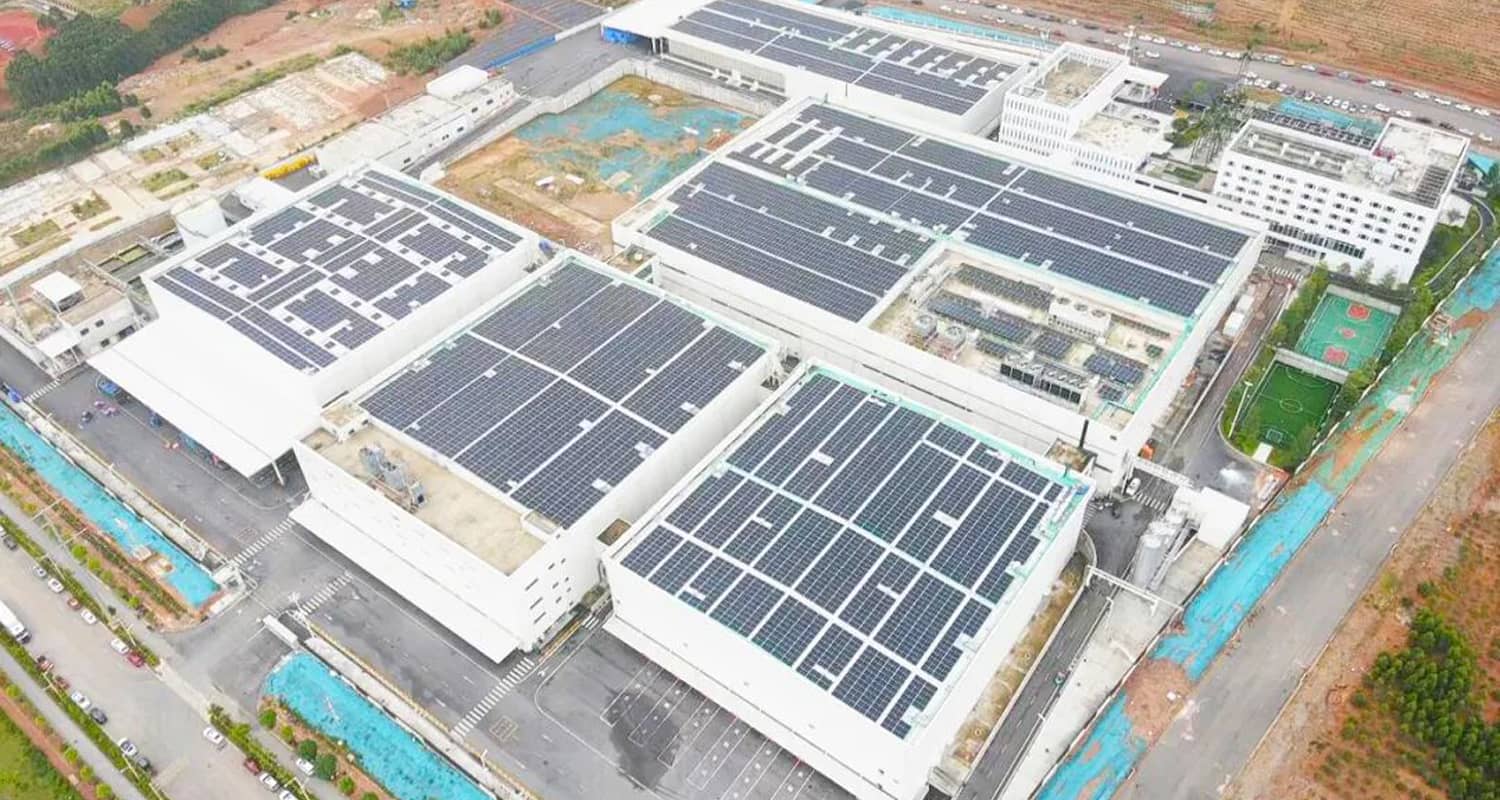
What is Master Kong’s motive behind its foray into photovoltaics (PV)?
Recently, the business scope of Master Kong (Chongqing) Instant Food Co., Ltd. was updated to include power generation, power transmission, power supply (distribution), and the leasing of photovoltaic power generation equipment. On the surface, it appears that an instant noodle manufacturer is venturing into the PV sector; however, a closer look reveals that this is not a typical "cross-industry" move in the conventional sense.
The updated business scope does not include the manufacturing or sale of PV components, inverters, or other PV equipment. In other words, Master Kong’s entry into the PV space does not involve the manufacturing side—it is not a "cross-industry" expansion in the traditional understanding of the term.
Essentially, the company is formalizing the "energy-use rights" of its factory rooftops as assets. As early as 2021, Master Kong began installing rooftop PV systems at its facilities in Guangzhou, Xi'an, Suzhou, and Tianjin. By 2024, the installed capacity at its beverage plants had reached 15.5 MW, with further projects currently out for tender at its factories in Wuhan, Fujian, and Jinan.
Previously, these rooftop power stations were designed for "self-generation and self-consumption, with excess power fed into the grid"—a model primarily aimed at saving on electricity costs. Now, by securing qualifications for power generation, transmission, and supply/distribution, the company has established the institutional framework required to participate in electricity trading as an independent market entity.
This shift carries implications far beyond the mere installation of solar panels. When a food production facility can officially list "power generation" within its business scope, it ceases to be merely a consumer of electricity. It becomes a producer, a consumer, and—increasingly—a market participant (trader). This is the true significance of Master Kong’s strategic move.
Retail Giants Turn to Rooftop Photovoltaics
Master Kong is not an isolated case. The adoption of distributed PV by retail and consumer goods companies has evolved from sporadic pilot projects into a systematic, strategic initiative—though the specific approaches vary from company to company.
In July 2024, a distributed PV project at Daka International (associated with the tea-drink chain Mixue Bingcheng) in Chongzuo, Guangxi, was successfully connected to the grid and began generating power. This project was meticulously designed and constructed by the Guangxi Institute of China Energy Engineering Corporation (Energy China). By fully utilizing the factory’s rooftop space to install 5.57 MW of high-efficiency dual-glass photovoltaic (PV) modules, it has become the largest single-site PV power plant in Chongzuo City to date. With an annual power generation exceeding 5.7 million kWh, the project reduces carbon emissions by 7,176 tons per year. Operating under a "self-consumption with surplus power fed to the grid" model, it is projected to save over 18 million RMB in electricity costs over 20 years, significantly lowering operational expenses for Daka International (Mixue Bingcheng).
In the same year, the Luckin Coffee (Jiangsu) roasting facility officially commenced production in Kunshan, Suzhou. Construction of the facility began in 2022 with a total investment of 120 million USD. It integrates green coffee bean storage, distribution, roasting, packaging, and sales, boasting an annual roasting capacity of 30,000 tons—making it the largest single-site coffee roasting facility currently in operation within China’s coffee industry.
Notably, the facility’s operations rely primarily on "clean energy." In collaboration with Huadian New Energy, Luckin Coffee installed 15,000 square meters of solar PV equipment. Generating approximately 3.5 million kWh annually, this system meets the majority of the facility’s electricity needs for climate-controlled (constant temperature and humidity) bean storage and coffee roasting, further minimizing the environmental impact of the production process.
In 2025, Trina Solar partnered with the snack industry giant Bestore (Liangpin Puzi) to complete a 5 MW distributed PV project at its production base. The project utilizes Trina Solar’s high-power "Vertex" N-type 720W modules.
The project generates 5.5 million kWh of electricity annually, covering over 60% of the facility’s daytime power consumption. It yields annual cost savings of approximately 4.67 million RMB; when combined with the benefits from green energy certificates and energy storage optimization, the total comprehensive return exceeds 5 million RMB. Furthermore, the rooftops of large-scale industrial facilities—such as those in the food and beverage, alcohol, and logistics sectors—are now frequently equipped with photovoltaic (PV) systems. Given their high electricity consumption, these sites have become prime targets for PV developers.
However, while these enterprises have adopted solar power, their operational models vary. Some choose to invest in the systems themselves, while others opt for a model where an energy service provider handles the investment and construction. In the latter case, the enterprise purchases electricity at a discounted rate without owning the power plant assets; this lowers the entry barrier, though the financial benefit is limited primarily to savings on electricity bills.
Will it become a trend for enterprises to participate in electricity trading using their own rooftop PV systems?
For companies that own large-scale facilities and rooftop PV installations, participating in electricity trading is certainly an emerging trend—though it will not be a universal one.
The primary driver stems from structural changes in the regulatory framework. Document No. 136 (issued in 2025) stipulates that, in principle, all electricity generated by new energy sources and fed into the grid must enter the electricity market, effectively ending the era of fixed feed-in tariffs. Subsequently, Document No. 4 (issued by the General Office of the State Council in 2026) further supports the participation of distributed new energy in the market through mechanisms such as aggregated or direct trading. The policy direction is clear: distributed PV is no longer treated as a specially subsidized sector but is instead being pushed into the market, where it must learn to determine its own pricing.
The practical consequences are already evident. In Shandong’s spot electricity market, prices have at times plummeted to 0.013 yuan per kWh during midday periods of peak solar generation. In Western Inner Mongolia, negative electricity prices were recorded for consecutive periods in February 2026. Meanwhile, in Zhejiang, adjustments to time-of-use electricity pricing have reduced the revenue per kWh for solar power from approximately 0.79 yuan to 0.54 yuan—a decline of about 32%. Consequently, sentiment across the industry has cooled.
In the first quarter of 2026, new distributed PV installations nationwide reached 21.57 GW, a year-on-year decline of nearly 41%. For enterprises, this means that rooftop PV has shifted from being merely an "ESG promotional asset" to an asset requiring rigorous financial calculation. Factors such as the proportion of self-consumed electricity, the potential to sell surplus power at favorable prices, and the decision of whether to own the system outright or outsource it to a third party have all become critical strategic choices. Therefore, the certainty of a trend and the certainty of profitability are two different things. The profitability of self-owned photovoltaic (PV) systems participating in electricity trading is diverging sharply.
The first factor is the self-consumption ratio. Industrial and commercial electricity prices generally range from 0.7 to 1.0 yuan per kWh. Every kilowatt-hour of solar power consumed on-site translates into savings equivalent to the high retail electricity price, and these savings remain unaffected by fluctuations in spot market prices. Consider a 3.5 MW rooftop PV system: with an investment of approximately 14 million yuan and an annual output of about 3.9 million kWh—90% of which is consumed on-site—the system would save over 3 million yuan in electricity costs annually, leading to a payback period of roughly 4.5 years.
For factories with a low self-consumption ratio, a large portion of the generated electricity is fed into the grid; however, the potential returns are being eroded by market forces. In Jiangsu province, for instance, operators have estimated that the surplus electricity from existing projects can only be sold for about 0.22–0.24 yuan per kWh—barely above the guaranteed floor price.
In Shandong, the clearing price for PV power in the province’s inaugural competitive bidding round was just 0.225 yuan per kWh—far below the previous benchmark feed-in tariffs. The frequent occurrence of low or even negative spot prices during midday hours means that, in some cases, "the more you generate and sell, the more you lose."
Consequently, while it is inevitable that more factories will have their own PV plants participate in electricity trading, the ability to generate power is not the same as the ability to trade it effectively.
The recent change in the business registration of Tingyi (Cayman Islands) Holding Corp. (known as "Master Kong")—which appears to be nothing more than the addition of a few terms to its business scope—actually signals a fundamental shift in the relationship between a manufacturing giant and energy. When power generation becomes a licensed business activity for a factory, and when rooftop solar installations appear on the balance sheet, a food company ceases to be merely a consumer of grid electricity; it becomes a manager of energy assets.
It is foreseeable that more companies with installed PV capacity will follow suit. Yet, the critical questions moving forward are: how should the economics of this power be calculated, and how should the electricity be traded?



5th floor, Block A, Science Avenue,High-tech District, Hefei , Anhui .China
 Accueil